
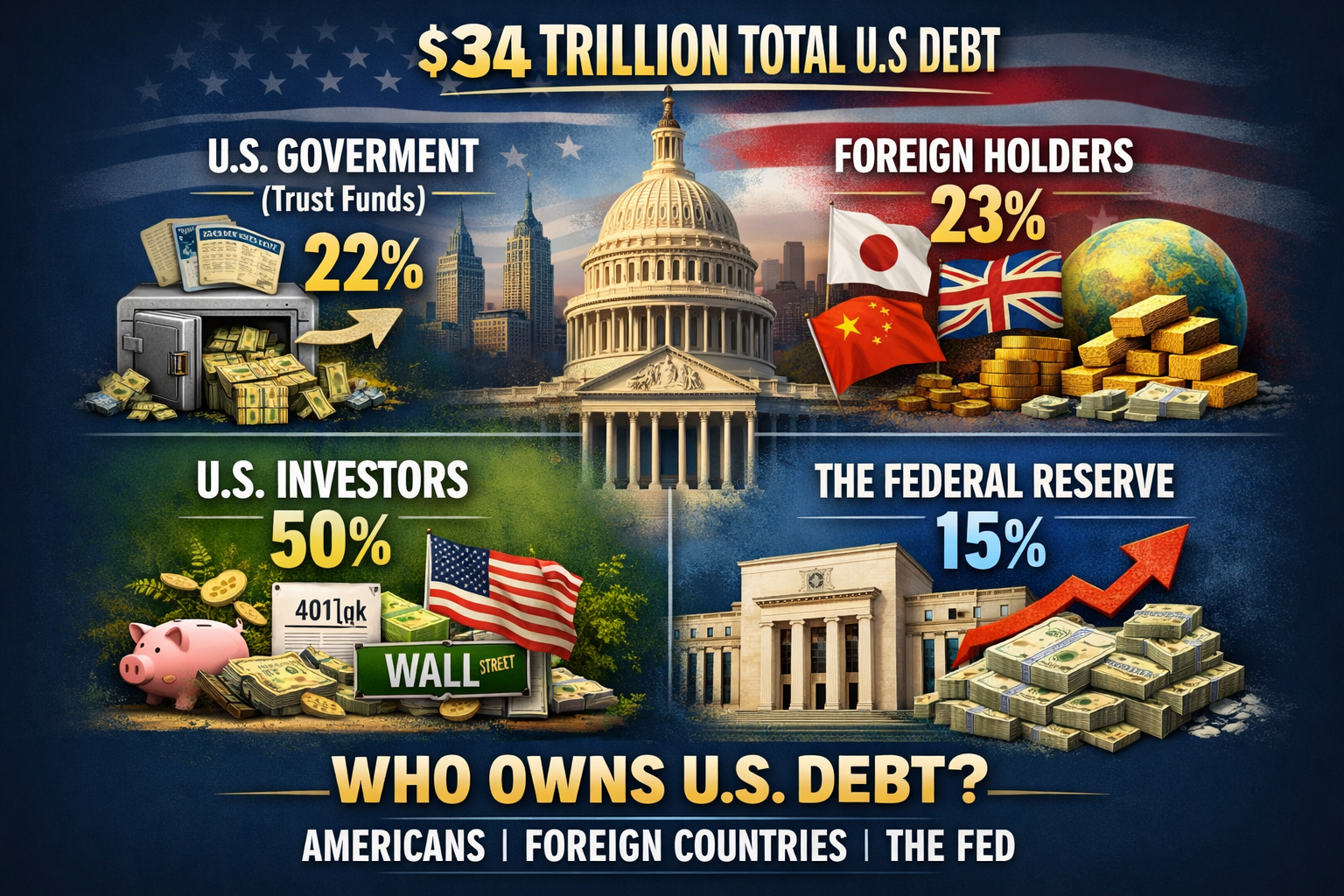
🇺🇸 1. U.S. Government Itself (Intragovernmental Debt)
~$7–8 trillion (≈ 20–25%)
This is money the government owes to itself, mainly through trust funds:
- Social Security Trust Fund
- Medicare Trust Fund
- Federal retirement funds
Think of this as internal bookkeeping — not money owed to the public or foreign countries.
🏦 2. U.S. Investors (The Largest Share)
~$16–17 trillion (≈ 50%)
This is the biggest bucket. Includes:
- U.S. banks
- Pension funds
- Insurance companies
- Mutual funds (401ks, IRAs)
- Individual Americans
- The Federal Reserve
So when people say “China owns our debt” — this group is why that’s misleading. Americans own most of it.
🌍 3. Foreign Countries (All Combined)
~$7–8 trillion (≈ 20–25%)
Foreign governments and investors buy Treasuries because they’re considered very safe and liquid.
Top holders:
- Japan
- China
- United Kingdom
- Oil-exporting nations
- European financial centers
China’s slice is only ~2% of total U.S. debt, even though headlines make it sound massive.
🏛️ 4. The Federal Reserve
~$5 trillion (≈ 15%)
The Fed holds Treasuries from:
- Quantitative easing (QE)
- Crisis interventions
Important nuance:
- This is technically government debt
- But interest paid to the Fed is returned to the U.S. Treasury, so it’s more circular than scary
📊 Big Picture Breakdown (Simple)
| Owner | Approx Share |
|---|---|
| U.S. Government (trust funds) | ~22% |
| U.S. investors & institutions | ~50% |
| Foreign holders (all countries) | ~23% |
| Federal Reserve | ~15% |
(Totals overlap slightly depending on classification, but this gives the right picture.)
🧠 The Key Takeaway
- The U.S. mostly owes itself and its own citizens
- Foreign countries are important buyers, but not dominant
- China reducing Treasury exposure is symbolic and market-moving, but not system-breaking
- The real risk to U.S. debt isn’t who owns it — it’s:
- Persistent deficits
- Rising interest costs
- Long-term confidence in fiscal discipline